

Breathing That Matters
Foundation Blog
Stress Tolerance
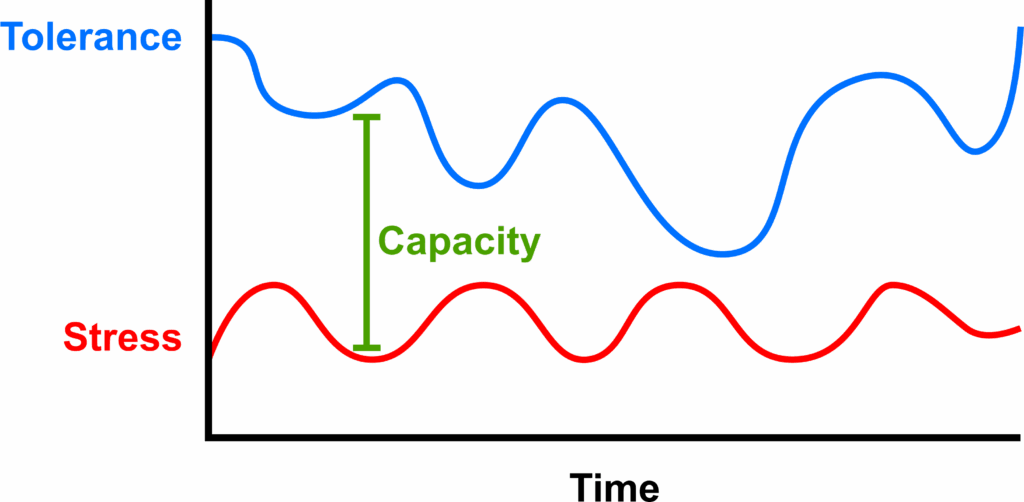
In life, we constantly encounter stresses – whether they are physical, emotional, or chemical. Our body’s ability to endure or act on these stresses is called its tolerance. When the stress we face exceeds our tolerance, or when our tolerance diminishes, we can experience various negative outcomes, such as injuries, pain, or illness.
What is Capacity?
Capacity is essentially the gap between the stress we face and how much tolerance we have. Ideally, we want to maintain a state where our tolerance is greater than the stress we encounter.
The “Breathing That Matters: Foundation” course illustrates different scenarios using a stress tolerance graph to highlight this relationship over time:
- Age-Related Decline: One graph shows an individual with strong genetic makeup and few traumatic experiences who lived without pain until their tolerance gradually dropped with age, eventually intersecting with their stress levels and leading to pain. This suggests that even with initial strengths, maintaining tolerance over time is crucial.
- Acute Injury Impact: Another graph depicts someone who experienced a lifting injury. This trauma caused a sudden reduction in their tolerance and capacity, making it difficult to perform daily activities as stress now frequently exceeded their lowered tolerance.
- Chronic Pain Cycle: A third graph represents someone living with chronic pain. In this scenario, their capacity remains consistently below their tolerance level, making it challenging to exercise or add any extra stress without further decreasing capacity and increasing pain or illness.
In all these cases, a foundational practice like Unloading is often beneficial.
How Unloading Restores Capacity and Promotes Thriving Resiliency
Unloading is specifically designed to reduce physical, emotional, and chemical stress on your body, allowing it to relax and recover (Learn more about Unloading). By actively decreasing the stress your body is carrying, Unloading helps your tolerance to recover and restores your capacity. This restoration enables you to take on more positive actions and move towards a state of “thriving resiliency”.
Thriving resiliency is depicted in the stress tolerance graph where stress and tolerance do not intersect; instead, you are exposing yourself to appropriate amounts and types of stress, allowing for recovery, and continuously building capacity. Bert’s story is a prime example: his telemedicine evaluation introduced him to Unloading, which calmed his nervous system and restored enough capacity for him to move better and experience less pain, motivating him to seek further in-person care.
The Pillars of Resilience
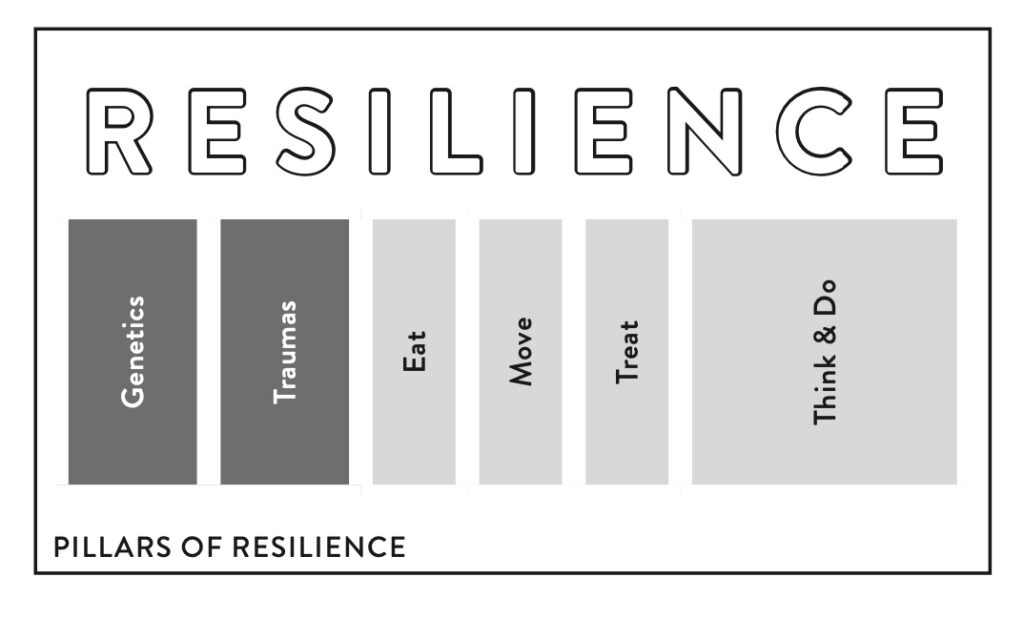
Your individual tolerance to stress is influenced by several factors which make up our Pillars of Resilience:
Uncontrollable Factors:
- Genetics
- Traumas
Controllable Factors:
- Diet/Nutrition (How you eat)
- Exercise/Movement (How you move)
- Treatment/Self-care (How you seek care)
- Knowledge/Experience (How you think and do)
While genetics and traumas are largely beyond our control, the other four—how you eat, move, care, and think and do—are within your influence and contribute directly to your resilience. Unloading specifically helps to improve your “treatment/self-care” pillars by facilitating recovery and enhancing your body’s ability to tolerate stress.
By understanding and actively managing your stress tolerance through practices like Unloading, you can significantly enhance your overall well-being, reduce pain, and build a more resilient body and mind.
Unlock your resiliency
Proper breathing is the foundation for stability and restoration of the nervous system. Our beginner course on breathing is built on cutting-edge research and decades of practical clinical experience with elite performers and everyday athletes. Watch the video to preview why our breathing course can supercharge your health, resilience, and performance.

Subscribe For More!
Want to receive more Insights like the one above? Complete the form below to subscribe.